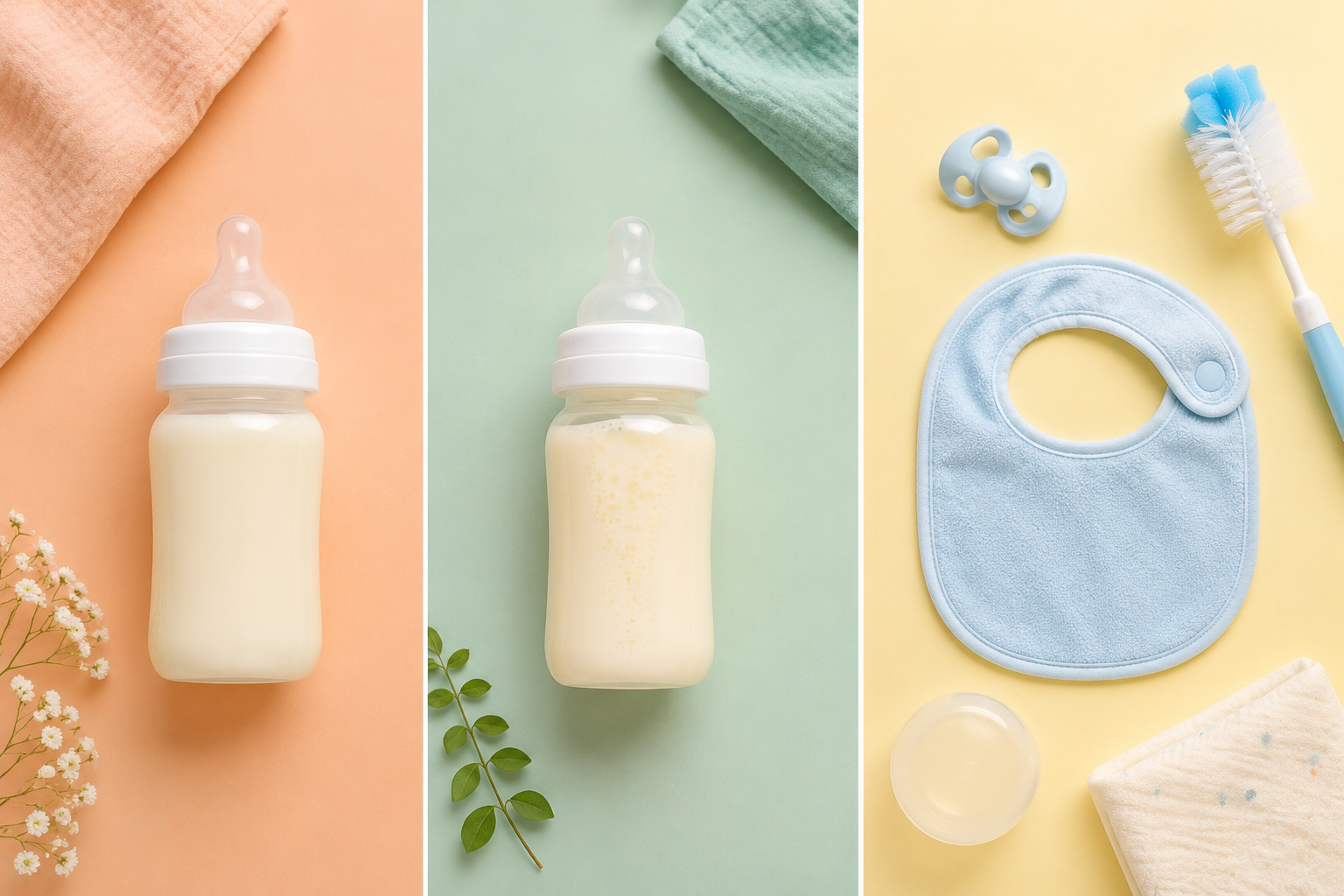
Infants: birth–5 months
Breast milk or iron-fortified infant formula is offered according to the infant’s feeding plan and hunger/fullness cues. The USDA range is 4–6 fluid ounces at meals and snacks.
 Tambra’s TinystepsLearning Academy LLCBalance for Life
Family resources
Tambra Tinysteps follows USDA Child and Adult Care Food Program meal-pattern guidelines when planning meals and snacks for infants and children.
Age-group guidance
Pictures are examples. Foods, textures, and portions are adjusted for readiness, allergies, feeding plans, and approved substitutions.
Breast milk or iron-fortified infant formula is offered according to the infant’s feeding plan and hunger/fullness cues. The USDA range is 4–6 fluid ounces at meals and snacks.
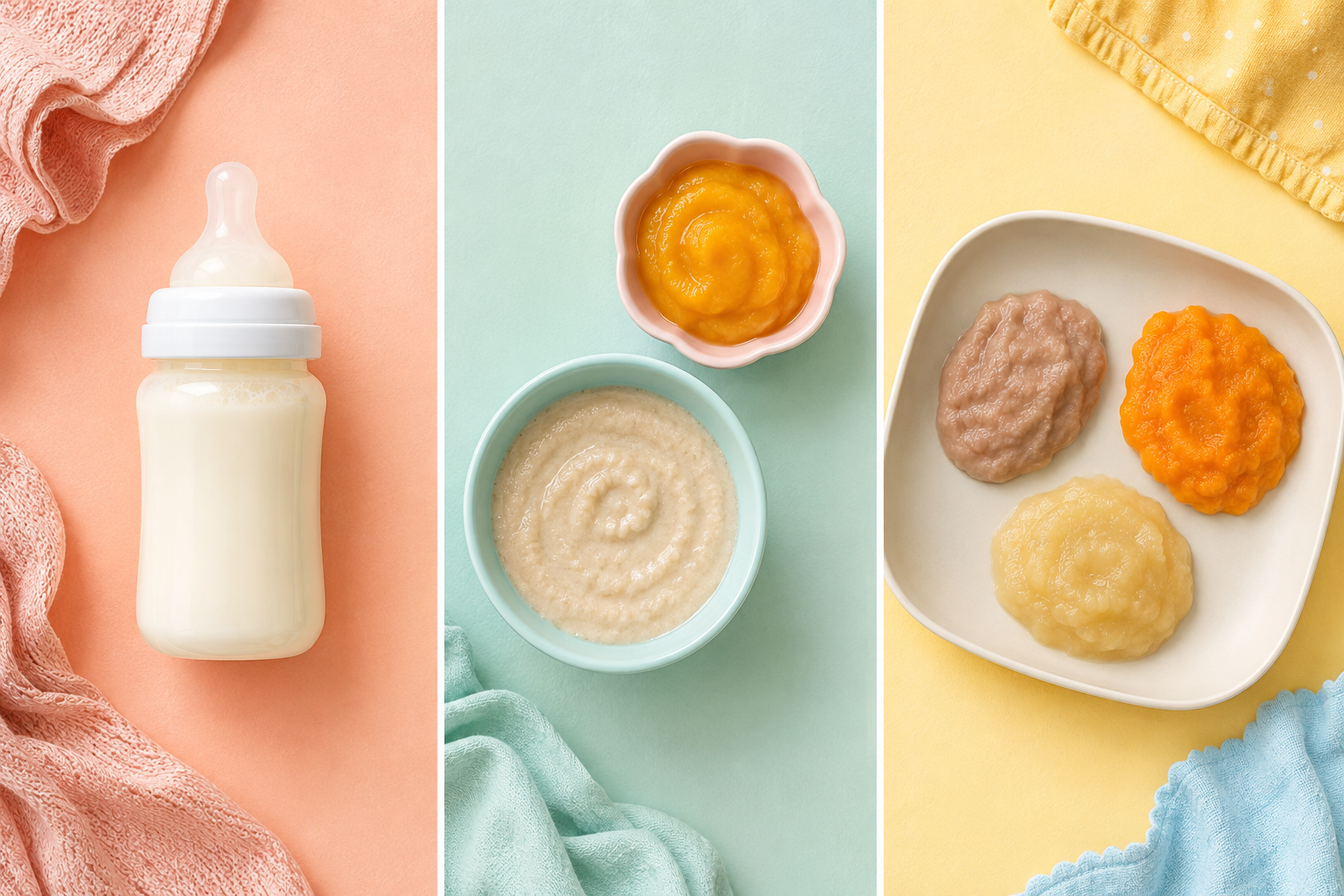
Breast milk or iron-fortified formula remains central. Developmentally ready foods may include iron-fortified infant cereal, soft protein foods, vegetables, and fruits. No fruit or vegetable juice is served.
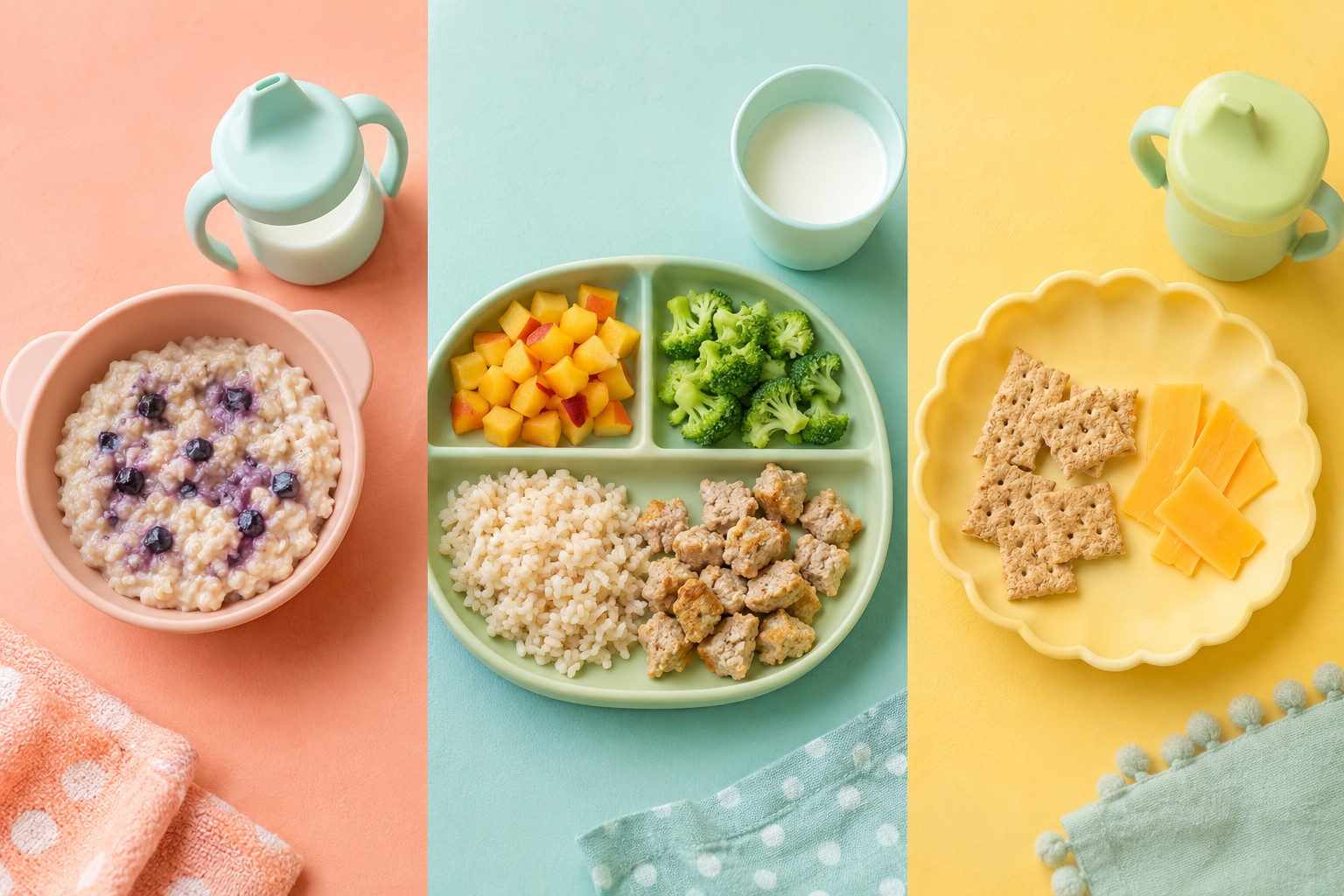
Breakfast example: 4 oz milk, ¼ cup fruit/vegetable, and ½ oz equivalent grain. Lunch example: 4 oz milk, 1 oz equivalent protein, ⅛ cup vegetable, ⅛ cup fruit, and ½ oz equivalent grain.
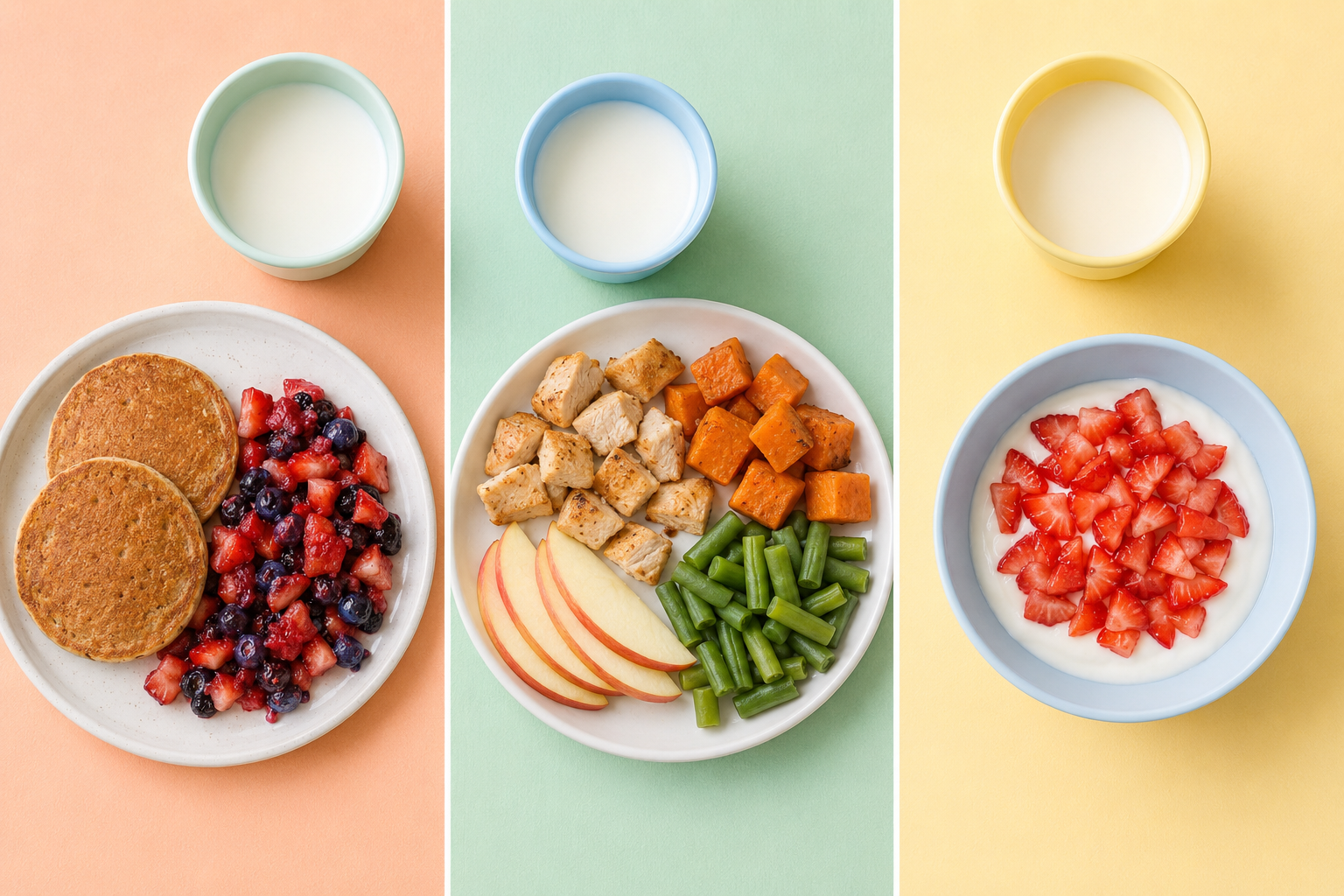
Breakfast example: 6 oz milk, ½ cup fruit/vegetable, and ½ oz equivalent grain. Lunch example: 6 oz milk, 1½ oz equivalents protein, ¼ cup vegetable, ¼ cup fruit, and ½ oz equivalent grain.
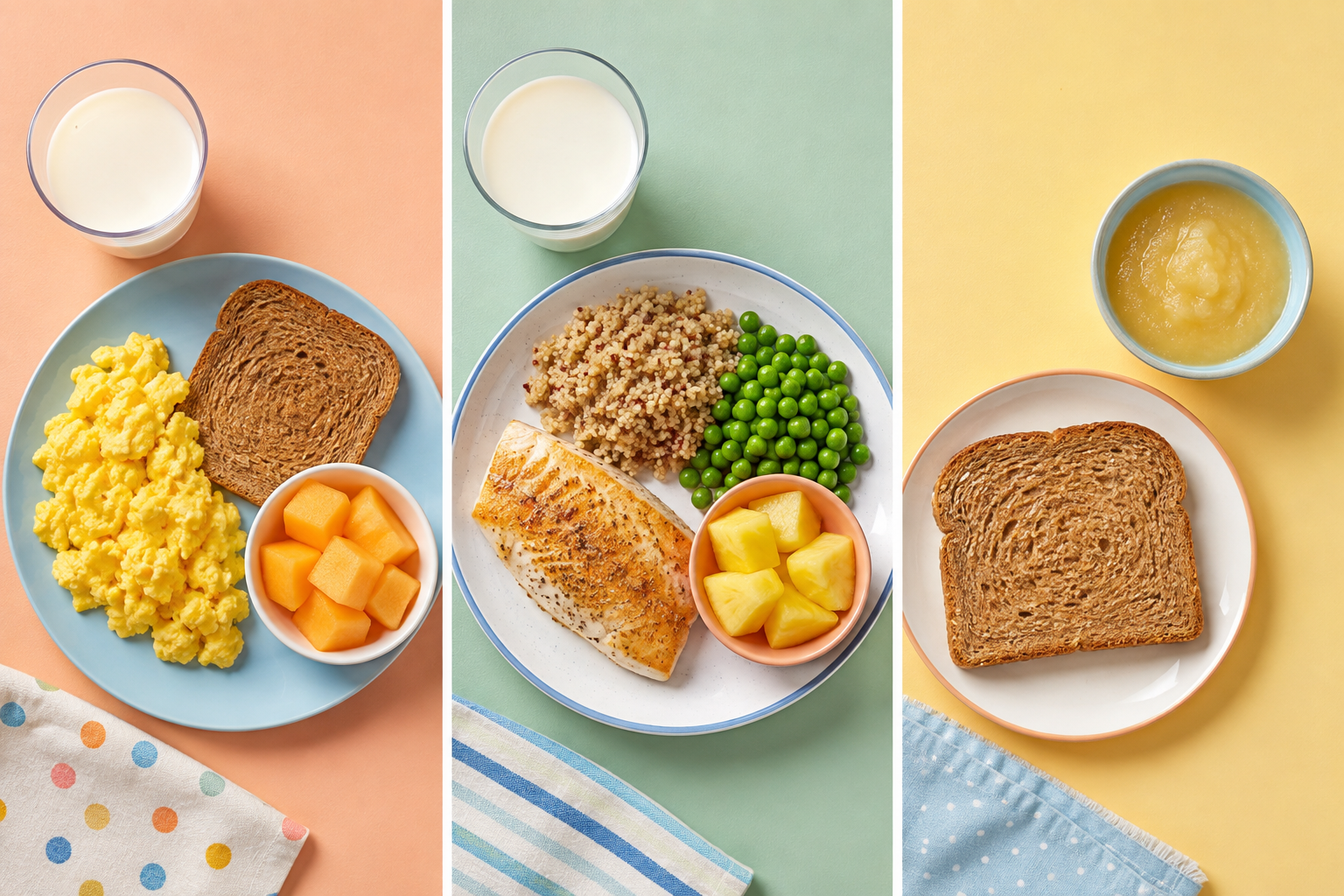
Breakfast example: 8 oz milk, ½ cup fruit/vegetable, and 1 oz equivalent grain. Lunch example: 8 oz milk, 2 oz equivalents protein, ½ cup vegetable, ¼ cup fruit, and 1 oz equivalent grain.
Sample Monday–Friday menu
The foods below are examples. Infants receive individualized, developmentally appropriate foods rather than the standard children’s menu. Portions for ages 1–2, 3–5, and 6–12 follow the applicable meal pattern.
| Day | Breakfast | Lunch | Snack |
|---|---|---|---|
| Monday | Oatmeal, blueberries, and milk | Turkey meatballs, brown rice, broccoli, peaches, and milk | Whole-grain crackers and cheese |
| Tuesday | Whole-grain toast, banana, and milk | Baked chicken, sweet potato, green beans, apple, and milk | Yogurt and strawberries |
| Wednesday | Whole-grain cereal, pear, and milk | Bean-and-cheese quesadilla on a whole-grain tortilla, corn, orange, and milk | Age-safe cucumber and hummus |
| Thursday | Scrambled egg, whole-grain toast, melon, and milk | Baked fish, quinoa, peas, pineapple, and milk | Unsweetened applesauce and whole-grain toast |
| Friday | Whole-grain pancakes, berries, and milk | Turkey-and-bean pasta sauce, whole-grain pasta, spinach, pears, and milk | Yogurt and banana |
Food safety and family communication
Families must provide allergy, medical, religious, cultural, texture, feeding, and approved-substitution information through the program’s required process. Food is prepared and cut in age-appropriate ways to reduce choking risks.
Official references