Early literacy
Conversation, vocabulary, stories, print awareness, sound play, drawing, and early writing.
 Tambra’s TinystepsLearning Academy LLCBalance for Life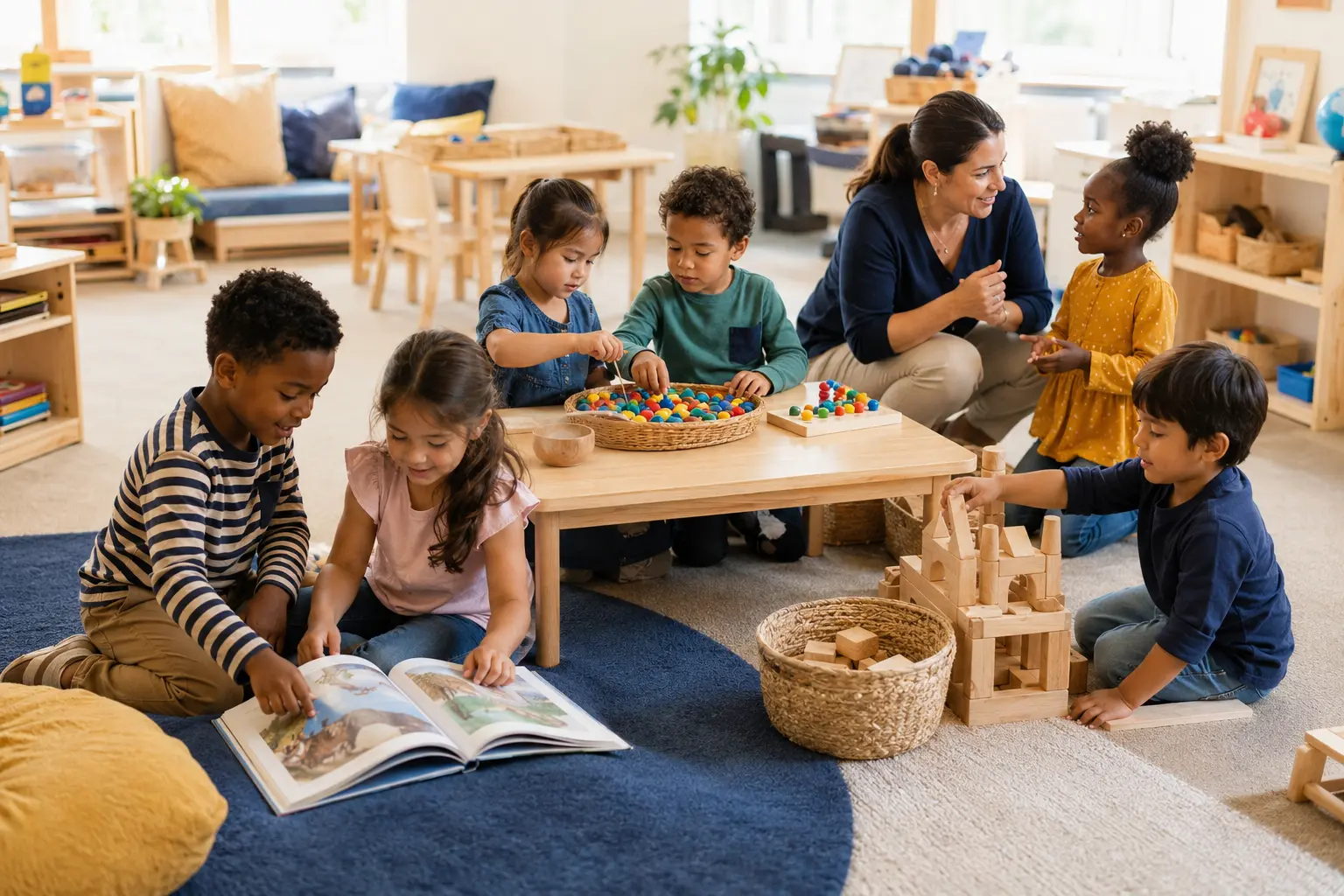
Planned kindergarten-readiness program
A playful, intentional learning experience planned to help eligible four-year-old children build confidence and kindergarten-readiness skills.
Planned learning experience
Learning will be developmentally appropriate, hands-on, culturally responsive, and connected across the day rather than limited to worksheets.
Conversation, vocabulary, stories, print awareness, sound play, drawing, and early writing.
Counting, quantities, patterns, shapes, measurement, sorting, and problem-solving.
Observation, prediction, investigation, nature study, and hands-on discovery.
Friendship skills, confidence, self-regulation, cooperation, and classroom responsibility.
Fine-motor practice, outdoor movement, coordination, health, and self-care routines.
Art, music, movement, storytelling, building, and imaginative play.
Family partnership
Families and educators work together to support communication, independence, attendance, routines, health, social-emotional development, and a positive transition to kindergarten.
A balanced learning day
The final schedule will be announced only after approval. The planned approach balances teacher-guided learning, child choice, movement, outdoor discovery, conversation, creativity, meals, and transitions.
Greetings, conversation, routines, songs, shared plans, and relationship-building.
Literacy, math, science, building, art, dramatic play, writing, and problem-solving choices.
Intentional experiences based on observation, readiness, interests, and Florida learning domains.
Movement, nature observation, garden science, measurement, teamwork, and supervised exploration.
Health, safety, and belonging
The planned VPK experience will operate within Tinysteps’ licensing, supervision, emergency, health, sanitation, authorized-pickup, and family-communication procedures.
VPK questions
No. The program is pending approval and availability. Families may submit an interest inquiry, but that is not enrollment or a guaranteed placement.
No. Florida VPK is a state-funded educational program with eligibility, provider, schedule, attendance, curriculum, and accountability requirements. Additional care outside an approved VPK session is a separate arrangement.
No. State eligibility does not guarantee placement with a particular provider. Tinysteps must first receive approval and then confirm space, schedule, documentation, and program readiness.
Interested families will receive direct communication after program approval, schedule, application steps, and availability are confirmed.