Tinysteps program commercial
Corrected Tinysteps branding with program highlights and enrollment contact information.
 Tambra’s TinystepsLearning Academy LLCBalance for Life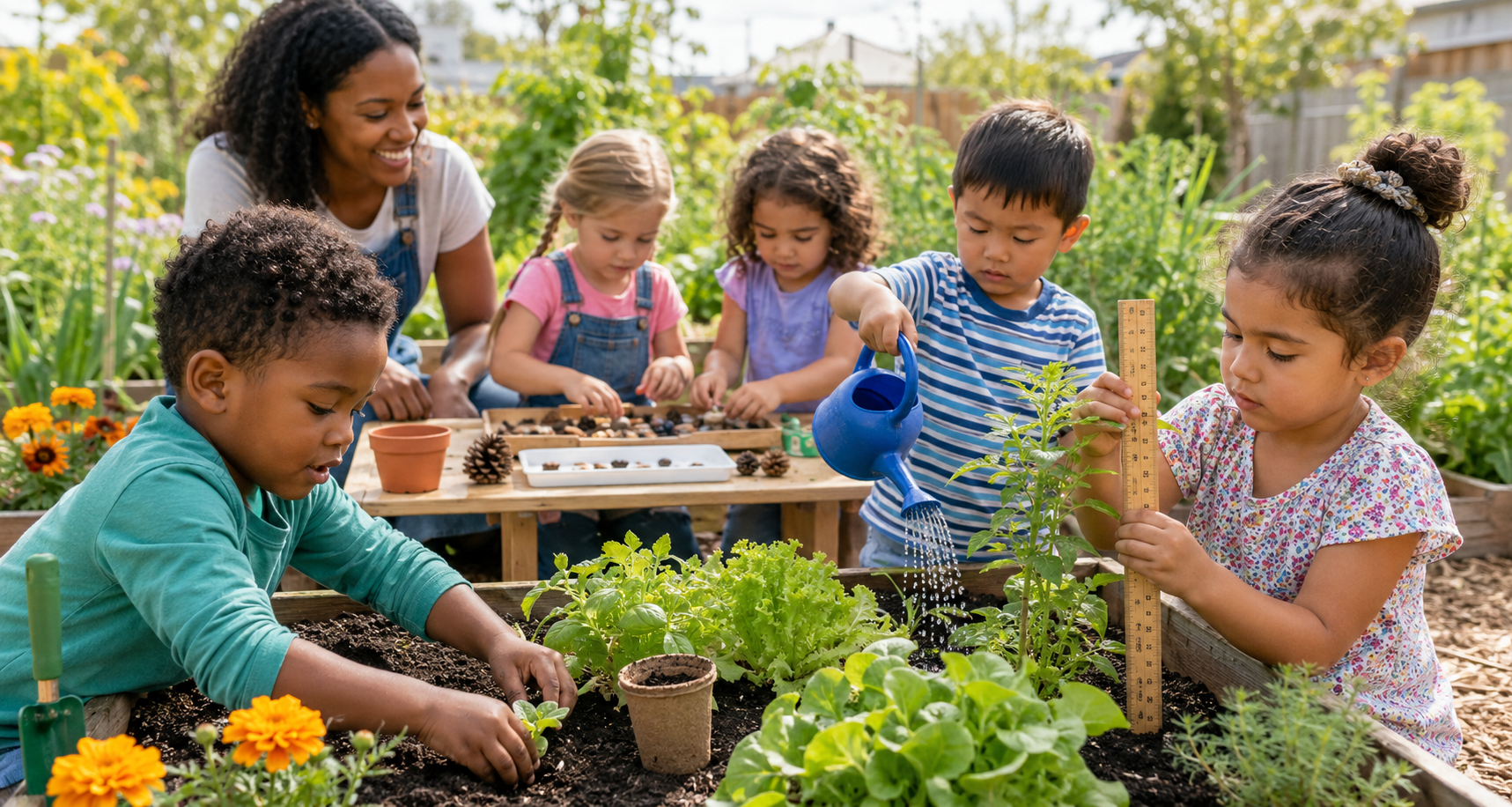
A living outdoor classroom
Infants, toddlers, preschoolers, school-age children, and visiting students connect with science, math, language, art, movement, and social learning through real experiences with plants, weather, water, insects, and seasonal foods.
Experiences are adapted by age and readiness. Infants and toddlers participate through closely supervised sensory observation; preschoolers and school-age children use developmentally appropriate tools; visiting students engage through approved learning experiences.
See the garden experience
Watch these two short advertisements introducing Tinysteps and its Outdoor Discovery Garden.
Corrected Tinysteps branding with program highlights and enrollment contact information.
A branded look at the garden’s play, exploration, gathering, and learning areas.
A real look at our space
This unedited walk-through helps families and prospective student partners see the real outdoor environment, age-appropriate seating, open play areas, learning materials, and activity stations before requesting a visit.
Outdoor arrangements may change as activities, seasons, weather, and children’s or students’ needs change. Families and educational partners may contact Tinysteps to ask questions or arrange an in-person visit.
What the program offers
Learners plant seeds and seedlings, study plant parts and life cycles, care for growing plants, and discover how food moves from seed to harvest.
Preschoolers, school-age children, and students count seeds, compare quantities, measure plant growth and water, sort natural materials, notice patterns, and create simple charts.
Learners observe clouds, sunlight, wind, rain, and temperature while discovering how weather affects soil, plants, insects, and garden care.
Learners discover how bees and butterflies move pollen, how ladybugs may help control whiteflies, and how ants and other insects live and work outdoors.
Preschoolers, school-age children, and students use age-appropriate tools and recycled materials to explore shade, watering systems, sturdy structures, drainage, and garden solutions.
Learners ask questions, build vocabulary, draw or record observations, create nature art, share garden jobs, and communicate their discoveries.
What we grow
Our garden changes with the season and growing conditions, giving infants, toddlers, preschoolers, school-age children, and students new things to observe throughout the year.
Confidence through understanding
Infants, toddlers, preschoolers, school-age children, and students are never required to touch wild insects. Educators teach age-appropriate, calm responses: observe from a safe distance, keep hands still, do not swat or disturb nests, move away slowly, and tell a supervising adult.
Learn through nature